If you have actually ever before leaned on a surround Melbourne during a damp stretch and noticed the wobble start in the posts, you currently recognize the genuine job of a good fence. It is not just maintaining things in or out. It is resisting rot, reducing deterioration, and staying straight when the climate swings from cozy and moist to chilly and gusty. The unsung heroes in that fight are the fence caps and rails, the components that sit where water accumulates, where wind loads struck, and where time has a tendency to do its sluggish damage.
When people speak about fence installer top quality, they generally state the blog posts and the overall appearance. Yet a fence that holds up decade after years is typically the one with the best caps and rails, fitted effectively and matched to the fencing type and the neighborhood problems. If you are selecting a fencing installer, or you are attempting to tighten up a fencing you already have, this is where the practical choices start.
Why caps and rails matter more than the majority of people think
A fence is a pile of little failures waiting to happen. Even when the lumber is dealt with, also when the steel is coated, water discovers weak points. It creeps into end grain, it swimming pools on horizontal surfaces, and it works its means via tiny gaps where screws, brackets, or welds create the perfect entry points.
Fence caps are the "stop the water" item. They cover the tops of blog posts, and they additionally influence just how airflow moves across the leading edges. Bed rails are the "hold the form" item. They take the burden of side pressures, including wind stress and the periodic unexpected push from a gateway or a lawn mower. When rails loosen up or droop, the entire fence starts to look weary, even if the blog posts are still sound.
In my experience, the fences that stop working early are hardly ever one huge trouble. They are usually a domino effect: caps that do not fit tightly, rails that were selected without thinking about just how water drains pipes, and repairings that wear away due to the fact that the incorrect product set was made use of. Good fence installers Melbourne customers frequently return later on, yet the issue typically seems like this: "The fencing looks fine, however the articles are relocating and the rails are turning." That is commonly caps and rail selection, plus installment details, capturing up.
Melbourne conditions that punish the incorrect materials
Melbourne is not the wetest area in Australia, however it is stubborn. You obtain repeated rain events, hefty dew, and lengthy shoulder periods where things remain wet. That combination is rough on products that catch moisture, and it is specifically rough on lumber articles and any type of metal hardware used near the ground or at the post tops.
Wind is one more factor. A fence does not simply rest there. It experiences pressure and suction, and that actions rails microscopically over time. Micro motion matters because it can loosen up screws, broaden gaps, and rub finishings off steel. When a coating falls short, deterioration speeds up, especially where water sits.
Then there is the ground side of the story. You could have strong drainage, or you may have a reduced area that stays damp. Articles can be fine in the beginning and afterwards begin to wobble as bordering dirt resolves or as dampness weakens the base. Bed rails will certainly respond by flexing, and if they are not supported correctly, the fence starts a sluggish drift.
This is why "durable" in Melbourne is not just about picking a product that appears solid. It has to do with picking components that behave well under wet-dry cycling, wind tons, and lasting movement.
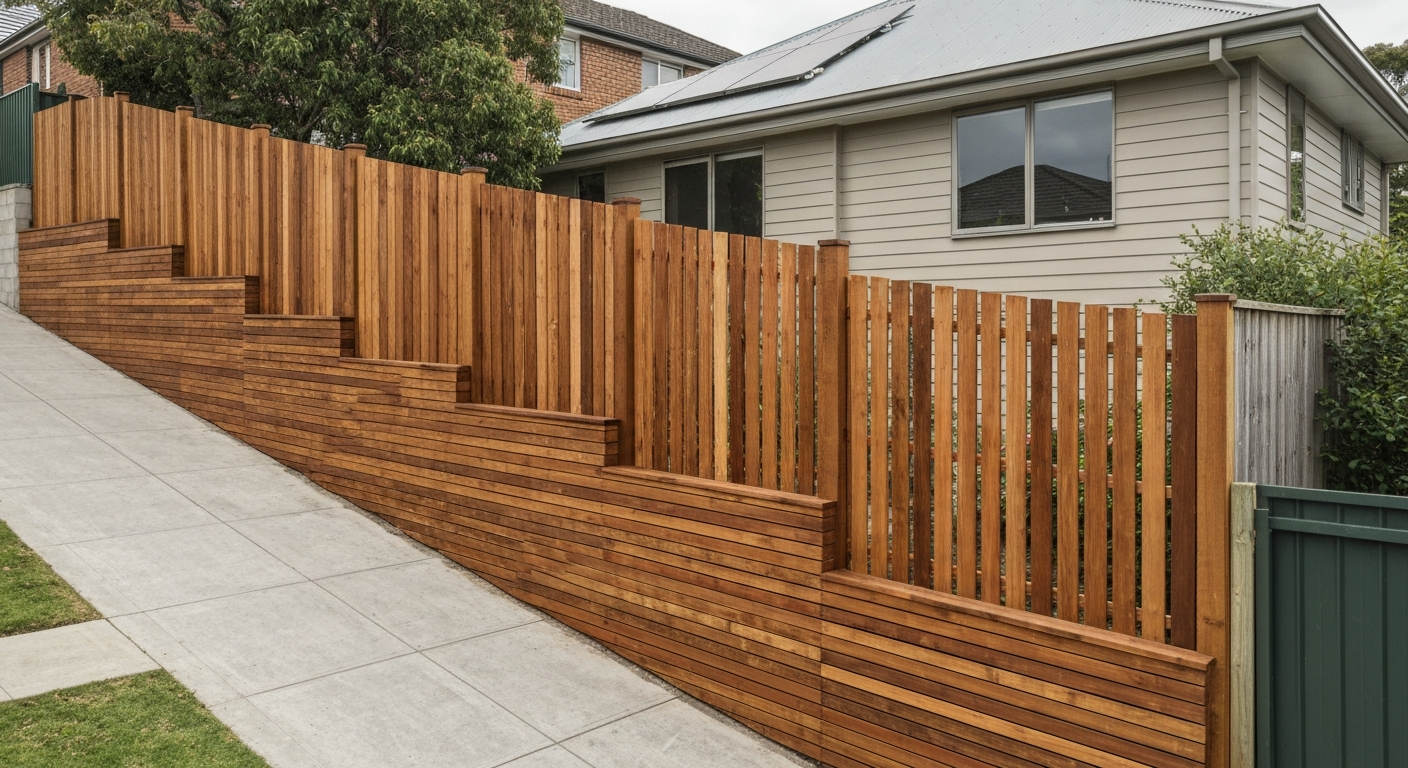
Timber, steel, aluminium, and colorbond: what adjustments for caps and rails
Whether you have a lumber fence, a Colorbond-style metal fencing, or a mix of materials, the ideal rail and cap selections depend upon exactly how the system is assembled.
Timber fences
With lumber, caps are about covering the top without creating a trap. The goal is to quit straight water contact with end grain. A cap that leaves a space can still allow water to reach the hardwood top, and once water gets involved in end grain, it travels. You additionally desire caps that match the article profile so water does not move around the cap and into the joint.
Rails matter since horizontal wood members hold water longer than upright surfaces. If the rails have a great water drainage course and are set up with the right spacing and alignment, they stay healthier. If they are somewhat misaligned, water can sit along one side, and you obtain faster endure that side.
Steel or Colorbond-style fences
With metal, toughness is highly connected to covering top quality and joint layout. Fencing caps for steel articles require to be properly fitted and protected so water does not sit at seams. Rails require to be straight and well connected because any type of looseness ends up being a corrosion problem, not just a stability issue. Corrosion commonly begins where 2 materials satisfy or where bolts are used in a way that breaks down safety coatings.
Another practical information: if you mix metals without cautious planning, you can produce problems where one metal wears away much faster. This is where a proper fencing installer approach issues, as opposed to a "good enough" hardware swap.
Aluminium fences
Aluminium is normally rust resistant, but it still endures if water is trapped at joints or if the fixings and braces are not the right type. Caps still matter, mostly for water monitoring and for stopping particles from collecting on top edges.
Choosing fencing caps: the "fit, seal, and drainpipe" rule
Most people photo caps as a decorative surface. In truth, a cap is a practical barrier. The best ones do 3 things.
First, they fit carefully sufficient that wind and rain can not work their method under the edge. Second, they help manage water so it streams away rather than sticking around at the top seam. Third, they support the messages structurally where appropriate, specifically for sure post configurations.
A quick reality check from website job: you can acquire a "costs" cap and still end up with brief life if it is set up loosely, reduced badly, or safeguarded in a way that allows water sit in the user interface. I have actually seen caps mounted that were enclose dimension but a little off abreast, and in time the space broadened because of activity and thermal development. That is when the water began discovering here the joint, and the wood underneath started to soften.
So when you are selecting fence installer Melbourne solutions, ask questions about exactly how the caps will be repaired, just how voids will be taken care of, and what the installer does when a message has a somewhat uneven profile.
Rails: straightness, accessory, and tons paths
Rails take the "push and pull" pressures. When a fencing fence installer sets up rails, they are producing a load course from the rails to the posts to the ground. If that path is weak, the fence will certainly bend greater than necessary.
The resilient rail options typically come down to three things.
Alignment initially: rails that are installed with consistent level and spacing share lots uniformly. If one run is greater or turned, it produces uneven stress and anxiety. That irregular stress and anxiety shows up later as drooping, twisting, or loose fasteners.
Attachment secondly: exactly how the rails are fixed to posts influences long-term stability and water exposure. Loose correctings enable micro activity, and micro movement brings wear to layers and can worry wood at bolt points. If the rail is affixed with parts that do not match exterior wetness, you will see rust touches or wood staining earlier than you want.
Compatibility 3rd: the materials and dealings with require to collaborate. A rail profile that looks right in a pamphlet may not drain pipes effectively if it catches water, and a cap that looks suitable might not secure well versus the post type.
In Melbourne, where rain keeps coming back, a rail that holds water is generally extra vulnerable than one that drains pipes quickly. That is not concept. It appears in the field as discoloration, paint malfunction, and faster activity on the lower edges.
Practical advice for sturdy fencing caps and rails (without guesswork)
It is easy to get overwhelmed by options. The method is to make choices based upon how your particular fencing will behave.
Consider what you already have. If your existing fence has rust at bolt factors, swelling wood near article tops, or sagging rails between blog posts, that is information. It hints at water retention and joint weak points. If your fence has actually remained right however the tops are deteriorating, that points extra toward caps and top joints. If your fencing wobbles and the panels really feel loose, rails and their attachment points are likely the issue.
If you are setting up new and you want resilient results, the most effective method is to think in systems. Articles, caps, rails, infill panels, braces, and mendings are one set. Transforming one part without readjusting the rest can create weak links.
Here is the kind of decision making that has actually assisted me most when clients ask what to select:
- If the environment is coastal or you get hefty aquatic exposure, finishes and material compatibility become a lot more important. If your fence line remains in a wind passage, rail rigidity and appropriate supporting issue greater than a slim visual alternative. If you expect individuals to lean or kids to bounce on gateways, rail attachment toughness ends up being a larger vehicle driver of long life than color choice.
Those are not "wonderful to recognize" details. They transform what lasts.
When rail dimension is "overkill" and when it is genuinely needed
There is an usual lure to select the tiniest rail profile available to conserve cash. In some cases that exercises. Yet in fencings that obtain routine wind pressure, or where long periods exist, smaller sized rails can become springy. A springy fence establishes loosening fasteners faster, and loosening up fasteners speed up deterioration and water access at joint interfaces.
On the various other hand, I have actually likewise seen fences where people update rails yet maintain weak post structures. In that situation, the rail ends up being solid sufficient and the messages still move, so the rails take the blame unfairly. Resilience originates from obtaining the whole support group right.
So as opposed to concentrating just on rail dimensions, I check out the period length, article depth and spacing, and how the fencing is exposed. A fence with shorter periods and strong post embedment can occasionally escape a lighter rail. A fencing with larger periods and bad dirt can need tougher rails, plus caps and brace systems that can take care of movement without creating water traps.
The install details that make sturdy caps and rails last longer
Even the best parts can fail if the installation develops problems.
Gaps and sealing
If caps do not sit properly, water can track right into the leading edges. For timber messages, that can cause softening. For steel articles, it can bring about deterioration beginning near the leading seam.
Drainage paths
Rails and horizontal participants require drainage. When rails are installed in such a way that produces a nadir or a caught location, they will hold moisture. That dampness after that attacks paint coatings, creates hardwood discoloration, and quicken degradation around fasteners.
Fixings and compatibility
Fasteners are not a minor component. A lot of deterioration starts around screws and screws since coatings and galvanising can be interrupted at the dealing with point. The best mendings for exterior conditions, and the ideal strategy to preventing water ingress, matters.
Consistent alignment
A fencing that gradually twists will certainly stress braces and rails. That pressure can open up spaces around caps and can worry hardwood where bolts penetrate.
An excellent fencing installer understands these web links. A quick "good enough" method usually looks penalty at handover and after that starts revealing problems at the very first hefty damp season.
A brief list for picking the right fencing installer
If you are comparing quotes from fence installer Melbourne service providers or fencing installers Melbourne alternatives, you desire inquiries that expose how they think of durability.
Ask what caps and rails are utilized for your certain fencing design, not just "what's the most inexpensive choice." Ask how they protect against water from resting at post tops and rail joints. Ask exactly how they take care of gaps at caps, especially if messages are not completely uniform. Ask what fixings they utilize outdoors and whether the system is created as one suitable collection. Ask how they keep positioning constant along the complete run so rails do not turn under wind load.An expert response will certainly feel in-depth and practical, with clear factors. If the responses are unclear, you will generally pay later via upkeep or replacement.
Common failing factors I keep seeing on older fences
When individuals call fence installers Melbourne after years of ownership, they often show me the weak spots. Below are patterns that repeat.
Sometimes the cap looks fine, however the wood below is soft. That generally indicates water has actually been surpassing the cap side or via a seam. Often the rail brackets rust at the same locations along the fence, showing covering breakdown at constant joint points. In some cases the rails look bowed between articles, which indicates inadequate stiffness or lengthy periods without sufficient support.
A great installer can normally map these failings to the installation decisions. The cap style, the rail profile, and the addiction approach each leave a trademark. Once you learn to read those signatures, picking resilient caps and rails becomes far more confident.
Weatherproofing upgrades: what really aids after issues start
top fencing contractorIf you already have a fence and it is showing very early indications of trouble, upgrades can assist. However the "upgrade" requires to match the root cause.
If the problem is water at blog post tops, focusing on caps is practical. If the problem is rail totter, strengthening the rail accessory and inspecting positioning matters. If you are seeing deterioration at correctings, switching over hardware or boosting sealing around joints can reduce deterioration.
One essential truth: if rot has actually progressed deep into wood, no cap will turn around that. At that point, replacement is the sturdy option. The very same applies to metal messages where matching has begun at the surface degree and spread out around fittings. You can often secure, but lasting longevity frequently needs targeted substitute plus better caps and rail attachments going forward.
Balancing durability with appearance and budget
Durability decisions can clash with aesthetic appeals. For instance, a cap system that drains pipes well could have a slightly different account than the one that matches your original appearance. Rails with much heavier accounts could visually "enlarge" the fencing line. And using one of the most corrosion immune mendings can elevate the quote.
The method I come close to compromises is straightforward: spend where the failing begins, not where the fencing is most convenient to photo. The top seams are where water focuses. The rail joints are where deterioration and looseness begin. If you are choosing in between a much better cap fit and an attractive rail information, select the cap fit. The fencing will still look good if the leading keeps healthy, and the rail joints do not open up over time.
You can usually obtain both looks and sturdiness, yet only when the system is developed for outdoors from the start, as opposed to patched after the fact.
What to look for in cap and rail materials (and what to avoid)
It is tempting to chat only regarding "material toughness," however, for outdoor fencings the bigger tale is water and joint practices. Still, you can steer your choices by concentrating on performance.
For caps, I look for proof that the cap is made to match the post profile which it is made to take care of wind uplift and water runoff. For rails, I search for a profile that stands up to trapping water, and I take notice of just how it is attached and how it will tolerate movement.
What I stay clear of is the "mismatched components" technique. A cap that does not match the article can look fine for a period and afterwards quietly fall short. A rail that makes use of equipment not meant for outdoor direct exposure can create corrosion streaks early, also if the rail itself appears solid.
If you are dealing with fencing installer Melbourne service providers, it is practical to ask for a clear materials list for the caps, rails, braces, and mendings. You are spending for a system, except a set of components that happen to sit together.
How to plan for durability: the small questions that protect against huge regrets
When a client brings me their plan and desires "the long lasting choice," I always ask a couple of small inquiries that alter the recommendation.
What sort of soil do you have along the fencing line? How far apart are the articles intended? Is the fencing exposed to wind across an open backyard or tucked along a wall surface? Do you anticipate gates to get routine usage, and will people touch the fencing usually? Is there lawn sprinkler overspray hitting one section greater than others?
Those responses assist selections in rail rigidity, post spacing, and the type of cap system that makes good sense. A fencing that gets constant overspray can act like a coastal surround regards to wetness influence. A surround a gusty edge may need tougher rails or better attaching strategies.
These concerns are not rules. They are the difference in between a fencing that requires attention after a couple of seasons and one that remains stable via the ups and downs of Melbourne weather.
A home owner's perspective: what I wish even more people asked before installation
The ideal fencings I have seen are the ones where the proprietor understands what is under the "pretty surface area." The caps are not simply a surface. The rails are not simply straight lines. When an installer takes some time to clarify where water will certainly go, just how the caps obstruct it, and how the rails remain aligned under wind, you can feel confident in the outcome.
I keep in mind one job where a family had actually originally prepared to keep the existing rails and simply change a couple of fence areas. They were trying to maintain prices down, which is fair. But when we checked the rail attachment factors, the brackets were currently endangered, and water was getting involved in the joint between brace and article. Changing simply the fencing panels would certainly have left the weak links behind. We wound up changing the rails and fitted correct caps on the blog posts in the influenced run. The fencing still resembles it "belongs" to the rest of the yard, and it has actually stood up well with the damp season.
That is the lesson: long lasting caps and rails work best when they are set up as part of a meaningful whole.
Final ideas on long lasting fence caps and imprison Melbourne
Choosing fence caps and rails is not concerning chasing the most expensive product on the rack. It is about selecting components that handle water, resist deterioration, and keep alignment under actual wind and actual call. In a city like Melbourne, where moisture repeats and weather condition modifications maintain coming, those design choices appear fast.
If you are employing fence installers Melbourne or comparing fencing installer quotes, use the list attitude. Look for fit, drain, compatible fixings, and constant alignment. When those information are dealt with well, caps and rails end up being the reason your fence maintains its shape and its condition rather than becoming a long-lasting upkeep project.
And if you want an easy method to judge the decision, remember this: the top of the post and the rail joints are where time attacks initially. Pick caps and rails that shield those factors properly, and you will feel the difference each day you stroll past the fence.